How do retainers work for video production companies and freelancers?
Jan 01, 2026
Introduction
We all know that repeat profitable projects with clients that respect our work and input is the dream ticket for a video professional or a production company. But how does it work? How do we win retainers and how do we deliver them as video creators?
The video production industry is typically built on a project-by-project business model. As small business owners or even one-person operations, when a project is coming to an end or we see a gap coming up in our pipeline, we panic and head out to find that next opportunity, that next project, that next client. And that's exhausting. It's stressful. And it means that we can never really enjoy what we love doing most—creating beautiful video content that we're proud of.
What You'll Learn
- Why the project-by-project business model is holding your video business back
- The critical mistake that led to the bankruptcy of a $20M production company
- What clients and prospects truly care about (and how to leverage it)
- The two types of meetings you need to run for successful retainer delivery
- How to track and report ROI to keep clients locked in for the long run
A Lesson Learned the Hard Way
Back in 2010, I started my own video production company from scratch in my grandma's spare bedroom. Over eight years, I grew it to being valued at over $20 million. We worked with brands such as Adidas, Nike, and Estée Lauder. We had 33 full-time members of staff and hundreds of freelancers working on projects around the world at any given time.
But in 2018, I lost it. We filed for bankruptcy. I was embarrassed, worn out, and honestly depressed. Then I read a book—Blackbox Thinking by Matthew Syed. The subtitle struck a chord with me: "Why most people never learn from their mistakes, but some do." I'd made mistakes, a lot of them. But I also made some pretty good decisions. You don't build a company to that size without doing something right.
After reading that book, I made a promise to my wife. I told her that I was going to go again, to build again. But I promised her that I would never make the same mistakes again. So I took a year out and reviewed everything—over 2,500 projects, over 5,000 pitches, proposals, and quotes.
The Missing Piece: Retainers
There was one thing that I never did. I never had retainers. I never had long-term contracts. My clients were never locked in for the long run. And that meant that I could never forecast my cash. I could never invest confidently into the business, into offices, into staff, into myself, into my family. So whenever we faced a challenge or saw a cash issue coming up, my answer was always to sell the next project. And that worked for a while, but ultimately it was my downfall.
I knew that if I was going to keep the promise I made to my wife, I needed to develop a system that locked clients in for the long run and provided a recurring revenue stream. And the good news is that I did just that. I now have long-term contracts in place with brands such as Shell, Deloitte, and the International Olympic Committee.
What Clients Really Care About
Here's the thing. Your clients or your prospects—whether they be marketing professionals, advertising professionals, business owners, whoever—only really care about one thing, and that's results. If you can show them the results, if you can show them that their investment into you as a video creator has returned a positive return on investment, well, that's where they become putty in your hands and you can convert them to a retained contract.
How to Deliver a Retainer
A retainer is more about managing those ongoing relationships with your clients, keeping track of the results, talking them through the results, and—here's the big one—working with them to fill any gaps in their video marketing or communications plan.
When delivering a retained contract, there are two types of meetings that you will run:
Monthly Catch-Up Meetings: Within this meeting, you simply run through the content that you have created for them, look at the results, suggest ways in which you can improve poor-performing content, and ways in which you can capitalise on content that is popping off. These meetings are typically delivered via Zoom and last about 60 minutes. At the end of the meeting, you take action on any of the strong or weak areas of performance that you identified.
Quarterly Deep Dive Sessions: These are a little longer than the monthly catch-ups, but the framework is similar. You review their content creation for the past quarter, identify areas of weakness, areas of strength, but in this session, you also brainstorm content that can help them drive better results.
The Importance of Reporting
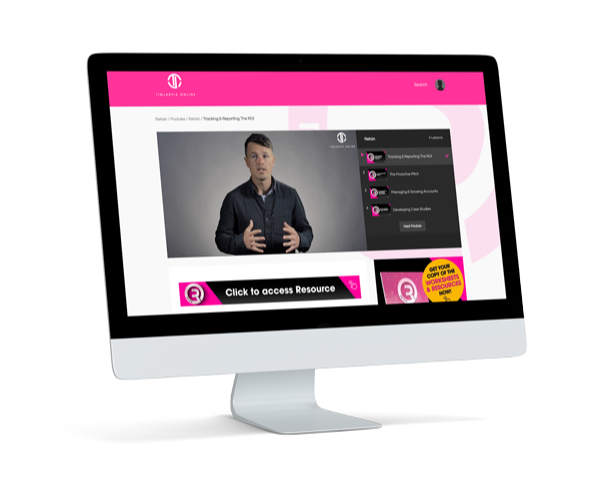
The one thing we can't shy away from is that you will need reports. You'll need a system in place to track the performance of the video content that you are creating for your client. The Retain book and video course walks you through how to set those systems up step by step—and it's so very simple. Sometimes it's just about knowing what you need to do and how to do it.
Take Action
So in answer to today's question, that's really how it works. You win a one-off project. You identify areas in which your client can drive better results through the ongoing creation of video content. You track their results and then you talk them through those results on a monthly and quarterly basis.
Video is powerful. It drives results. So when you have a system in place that allows you to prove those results, you move away from the project-by-project business model. You move away from the feast or famine way of living. You can forecast your cash at least 12 months at a time. You can invest confidently into you, your life, your family—and life becomes that much easier when you have recurring revenue streams.
You can get access to the Retain book, the video course, the audio books, and all of the resources for free via the link below.
Transcript
00:00:00:00 - 00:01:06:00
We all know that repeat profitable projects with clients that respect our work and input is the dream ticket for a video professional or a production company. But how does it work? How do we win retainers and how do we deliver them as video creators? Well, in today's Q&A, we're going to find out. Today's question is, how do retainers work for video production companies and freelancers? Let's roll back the years a bit. Back in 2010, I started my own video production company. I started it from scratch in my grandma's spare bedroom to being valued at over $20 million within the space of eight years. We worked with brands such as Adidas, Nike, and Estée Lauder to name a few. We had 33 full-time members of staff. We had hundreds of freelancers working on projects around the world at any given time. But in 2018, I lost it. We filed for bankruptcy. I was embarrassed, worn out, and honestly depressed. But then I read a book, Blackbox Thinking by Matthew Syed. The subtitle struck a chord with me. Why most people never learn from their mistakes, but some do.
00:01:06:00 - 00:02:22:00
Now, I'd made mistakes, a lot of them. I made some bad decisions. But I also made some pretty good ones. You don't build a company to that size without doing something right. But after reading that book, I made a promise to my wife. I told her that I was going to go again, to build again. But I promised her that I would never make the same mistakes again. So, I set out to work. I took a year out and reviewed everything. I applied blackbox thinking to my experiences. And from that review, from a year of painstaking analysis, reviewing over 2,500 projects, over 5,000 pitches, proposals, and quotes, there was one thing that I never did. I never had retainers. I never had long-term contracts. My clients were never locked in for the long run. And that meant that I could never forecast my cash. I could never invest confidently into the business, into offices, into staff, into myself, into my family. So whenever we faced a challenge or saw a cash issue coming up, my answer was always to sell the next project. And that worked for a while, but ultimately it was my downfall. I knew that if I was going to keep the promise that I made to my wife, I needed to develop a system that locked clients in for the long run and provided a recurring revenue stream.
00:02:22:00 - 00:03:52:00
And the good news is that I did just that. I now have long-term contracts in place with brands such as Shell, Deloitte, and the International Olympic Committee. But this is a problem that is so common in the video world. Our industry is typically built on a project by project business model. So, as small business owners or even one man bands, when a project is coming to an end or we see a gap coming up in our pipeline, we panic and we head out to find that next opportunity, that next project, that next client. And that's exhausting. It's stressful. And it means that we can never really enjoy what we love doing most, creating beautiful video content that we're proud of. Does this resonate with you? Surely there's a better way. Well, there is. In my time, I've been lucky enough to have built very strong relationships with many of the UK's leading advertising and marketing agencies. So when I was conducting that review, I reached out to a handful of my closest contacts in the industry and arranged what must have been 30 calls, coffees, and lunches with the UK's leading marketing executives, agency owners, and VPs. I wanted to understand why their companies were so successful, how they managed their client relationships, and I wanted to understand how this can work in the world of video.
00:03:52:00 - 00:04:55:00
Here's the thing. Your clients or your prospects, whether they be marketing professionals, advertising professionals, business owners, whoever, only really care about one thing, and that's results. If you can show them the results, if you can show them that their investment into you as a video creator has returned a positive return on investment, well, that's where they become putty in your hands and you can convert them to a retained contract. Now, I cover the steps that you need to take to be able to do this within my book, which coincidentally is called Retain. And it walks you through the five-step process that any production professional can take, whether they be a freelancer or they run a production company to attract, win, and deliver retainers. You can get access to that book, the video course, the audio books, and all of the resources for free via the link below this video. But the framework that I created allowed me to keep my promise to my wife and I unlocked long-term contracts, retainers with brands such as Shell, Deloitte, and the International Olympic Committee.
00:04:55:00 - 00:05:58:00
And life is somewhat different now than it was back in 2018. And because of the book, I've also been able to teach over 3,000 production professionals around the world how to do the exact same thing. But I'm not going to talk about how to win retainers in this video. I cover that in detail within the book. But I am going to show you what a retainer should look like and how to deliver on it. There's also a ton of resources within the link below which will make delivering retainers an absolute breeze. So, what does a retainer actually look like and how do you deliver it? Well, to be honest, it's very simple. As I said, your clients or your prospects only truly care about the results that the content that you're creating for them and the content that they are paying you to create is achieving. So, a retainer is more about managing those ongoing relationships with your clients, keeping track of the results, talking them through the results, and here's the big one, working with them to fill any gaps in their video marketing or communications plan.
00:05:58:00 - 00:07:01:00
When delivering a retained contract, there are two types of meetings that you will run. The first is a monthly catch-up meeting. Within this meeting, you simply run through the content that you have created for them, look at the results, suggest ways in which you can improve poor performing content and ways in which you can capitalize on content that is popping off. Those meetings are typically delivered via Zoom and last about 60 minutes. At the end of the meeting, you take action on any of the strong or weak areas of performance that you identified and that's your monthly meeting done and dusted. Then on a quarterly basis, you run what is called a deep dive session. This is typically a little longer than the monthly catch-ups, but the framework is similar. You review their content creation for the past quarter, identify areas of weakness, areas of strength, but in this session, you also brainstorm content that can help them drive better results. In the resources below, you'll find the template slides for the monthly catch up and the quarterly deep dive sessions, so you can access them straight away.
00:07:01:00 - 00:08:18:00
But the one thing that we can't shy away from is that you will need reports. You'll need a system in place to track the performance of the video content that you are creating for your client. But that's what the retain book and the video course does. It walks you through how to set those systems up step by step. And you'll be pleased to know that it's so very simple. Sometimes it's just about knowing what you need to do and how to do it. The book and the video course also shows you step by step how to set up the systems in which you can track and report the return on investment that your client is achieving from their investment into you. And again, it's so simple. So, in answer to today's question, that's really how it works. It's as simple as that. You win a one-off project. You identify areas in which your client can drive better results through the ongoing creation of video content. You track their results and then you talk them through those results on a monthly and quarterly basis. Video is powerful. It drives results. So when you have a system in place that allows you to prove those results, you move away from the project by project business model. You move away from the feast or famine way of living and you can forecast your cash at least 12 months at a time. You can invest confidently into you, your life, your family, and life becomes that much easier when you have recurring revenue streams. To truly benefit from the concepts that we have learned here, there are some actions to take. And that's all available for you for free along with everything else that you need to make your video business fly. No pay walls, no sneaky marketing tactics, just three books, one on marketing, one on sales, and one on retention. Over 24 hours of pre-recorded video content, a ton of resources, templates, and worksheets. I will ask you for your email address to get access to that content, but I will only ever send you one email relating to my paid stuff. So, go check it out and have a great day.